

CASE STUDY · LPI · 2021–PRESENT
WeConnect
I helped replace a failing website product for nonprofits with a modern, white-label site builder, then built the onboarding, templates and training that let a lean team sign over 1,000 websites.
Five colors, five steps: the customer journey from signed contract to live site.
MY ROLE
Product lead for onboarding, internal enablement and UX systems (official title: UX/UI Designer)
TIMEFRAME
2021 to present; first customers in September 2022
TEAM
Product, engineering, customer service, sales and the internal design team
PLATFORM
WeConnect, rebuilt on Duda’s white-label site builder, with onboarding tracked in Salesforce
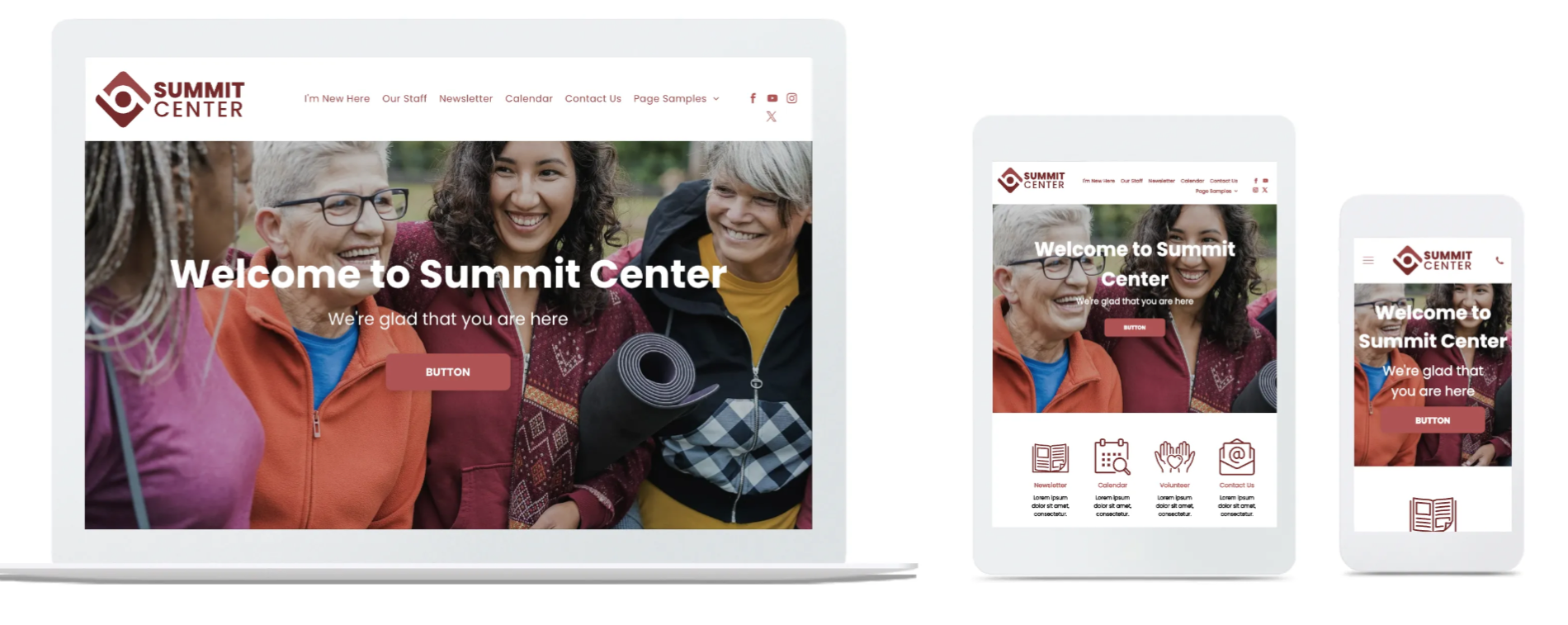
Summit Center, one of the starter templates, on desktop, tablet and mobile.
THE PROBLEM
A website product customers couldn’t use, and a business that couldn’t grow it
LPi’s legacy website product was failing its nonprofit customers, and the processes around it were failing the team.
Hard to customize. Design work happened outside the platform and came back in as flat images.
Poorly documented. Customers and staff were left to work things out alone.
Impossible to scale. Tech debt piled up, and every workaround added more.
Inconsistent onboarding and support. No shared process from sale to launch.
No room to grow revenue. The infrastructure couldn’t support monetization like sponsored content.
What we needed
A modern website builder that was:
Intuitive for non-technical users
Easy to implement with a lean team
Extensible for future monetization
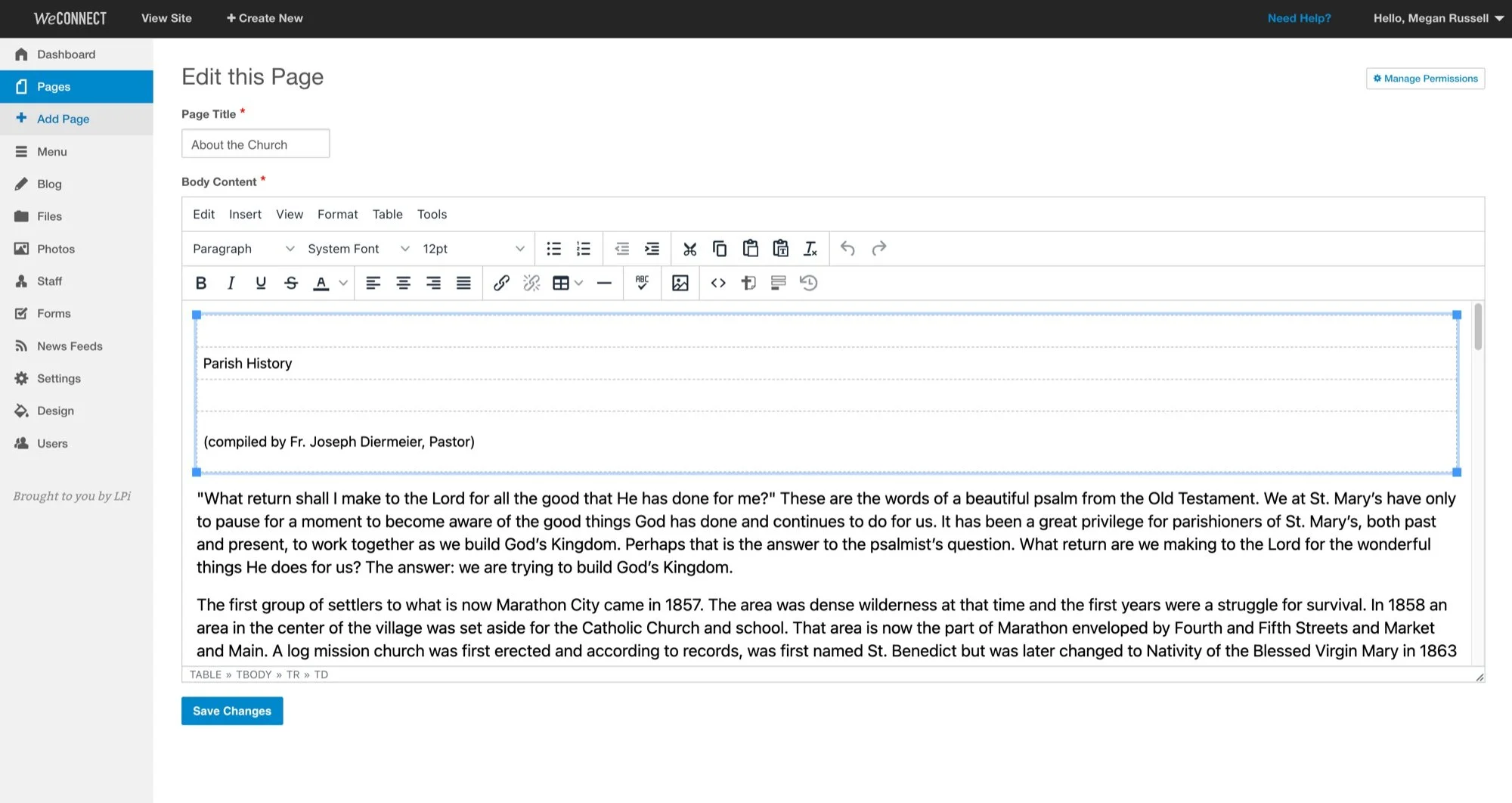
BEFORE · EDITING A PAGE
Editing a page on the old platform. Designs were made elsewhere, imported as JPEGs and dropped into a text box, which led to badly built pages and complicated workarounds.
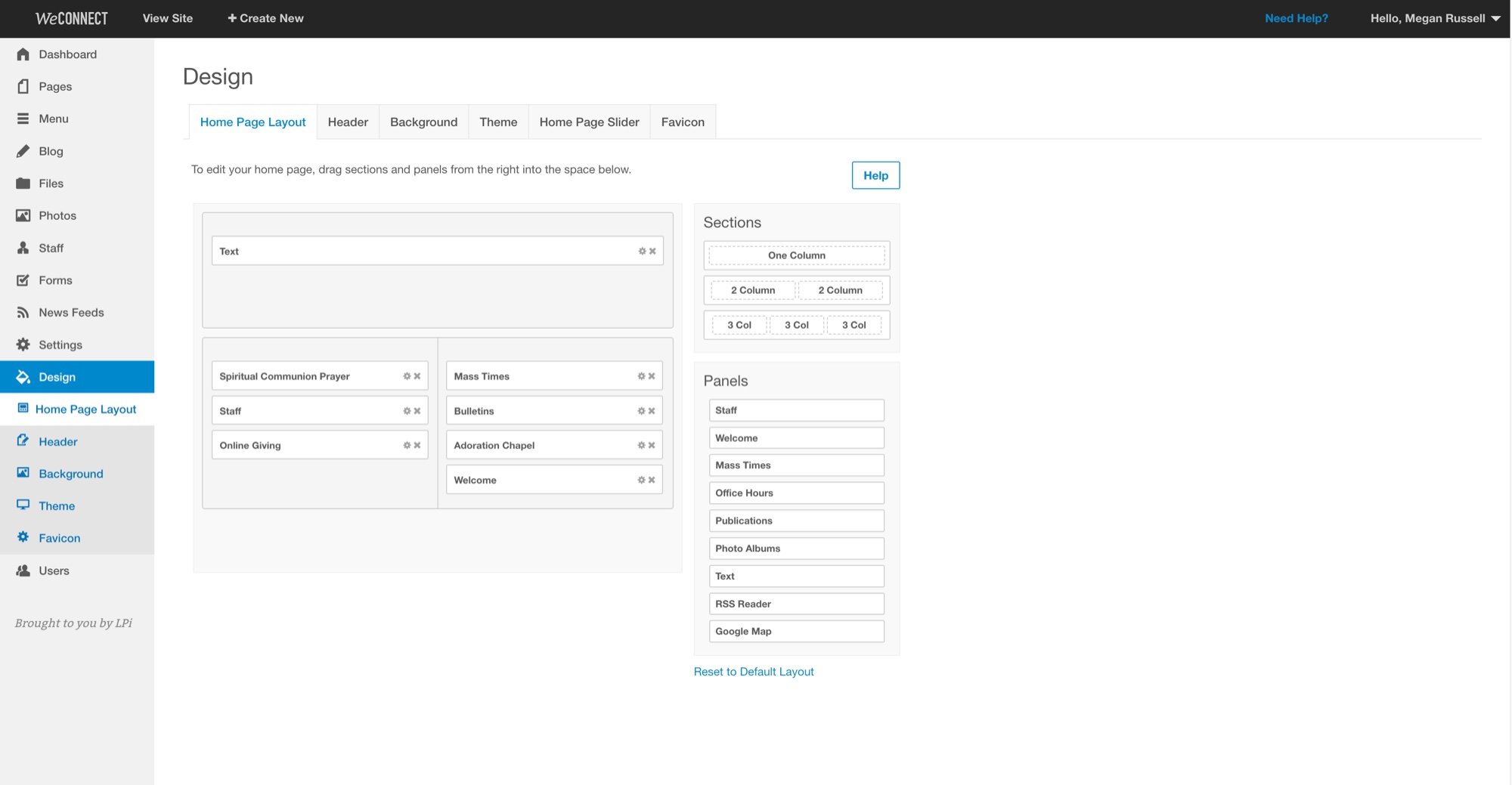
BEFORE · LAYING OUT THE HOME PAGE
Arranging columns and content blocks on the old platform. The options were limited and hard to understand.
MY ROLE
A designer’s title, a product lead’s job
Officially a UX/UI Designer, I worked as the product lead for onboarding, internal enablement and UX systems, collaborating across product, engineering, customer service and sales. I also co-led early design decisions for the sponsorship program built on the new platform, and I still run bi-weekly stakeholder meetings to catch issues and spot opportunities.
Platform discovery
Helped evaluate white-label site builders for usability, scalability and fit with nonprofits. Competitive analysis and research led us to Duda.
Customer journey design
Mapped the full experience, from purchase to setup to long-term use.
Templates and content
Designed reusable website templates and pre-filled content modules to speed up setup.
Internal enablement
Trained the internal design team, created subject matter expert (SME) roles and built support systems that scale.
Customer education
Produced training videos and guides for non-technical customers.
Monetization
Co-led planning for the sponsorship program and kept follow-ups moving across teams.
ONBOARDING AND CUSTOMER EXPERIENCE
One journey from signed contract to live site
I mapped every touchpoint between a customer signing a contract and their site going live, and my team produced the customer materials, internal training and presentation decks for each step.
01
Consultation
A personalized consultation with the web design team
02
Custom design
A design made for the organization
03
Content connection
Content moved over from the old site
04
Training
An interactive training session with the customer’s team
05
Ongoing support
Tech support at every step after launch
Fewer choices, as the process matured
At launch, customers chose from three levels of help, from $199 to have them design and move their own content, up to $899 for a full custom design and content transfer. I managed every scenario and created content for each one, across multiple verticals. Once the process was proven, we retired the tiers for two simple ways to buy.
CUSTOM WEBSITE
$999
The nonprofit buys its own site
A custom-designed website, with content transfer, training and ongoing support.
SPONSORED WEBSITE
$3,000 a year
A local sponsor pays for it
The same website, funded by a community sponsor who is recognized at the bottom of the home page.
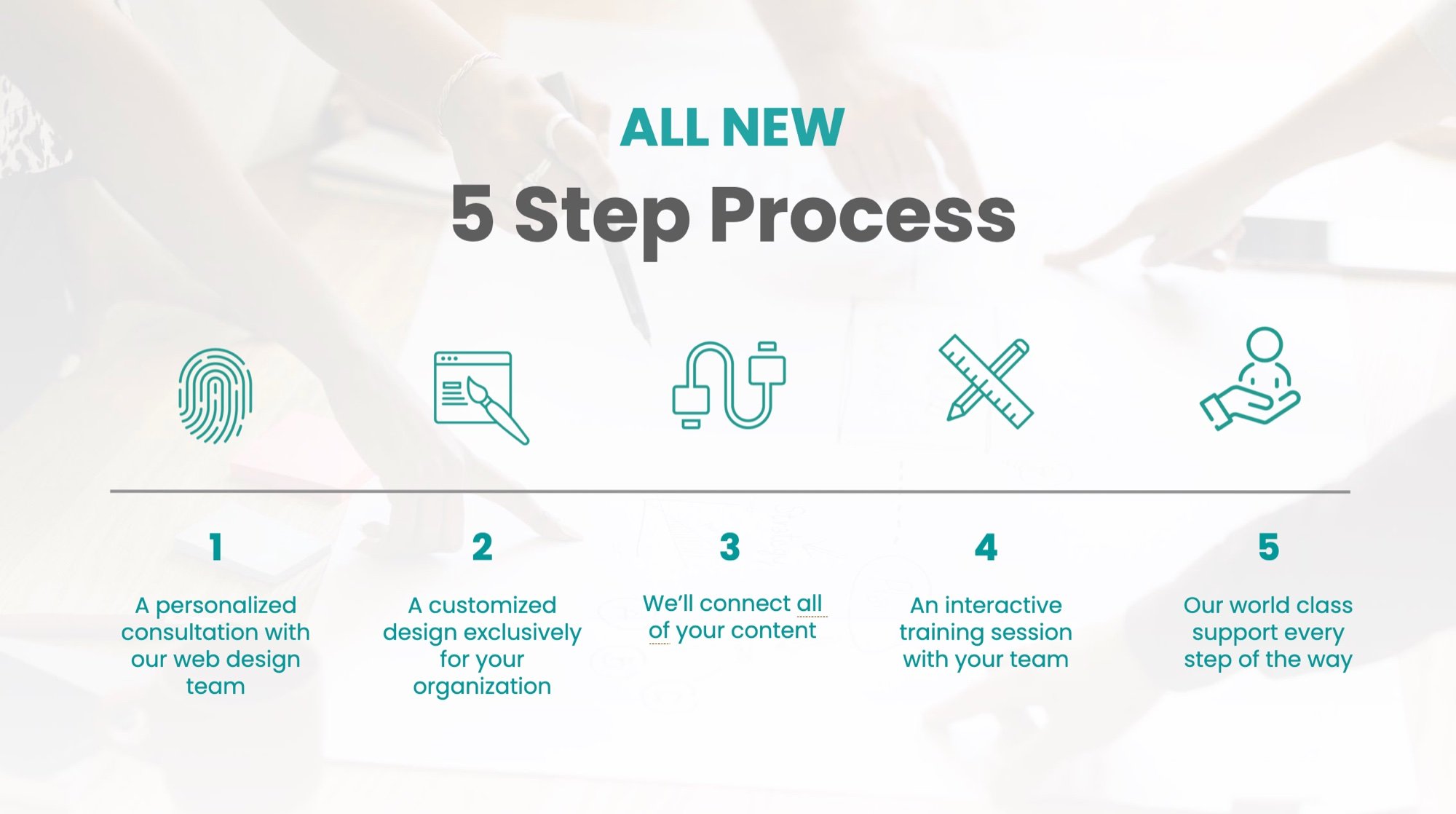
The five-step process, from a customer presentation deck.
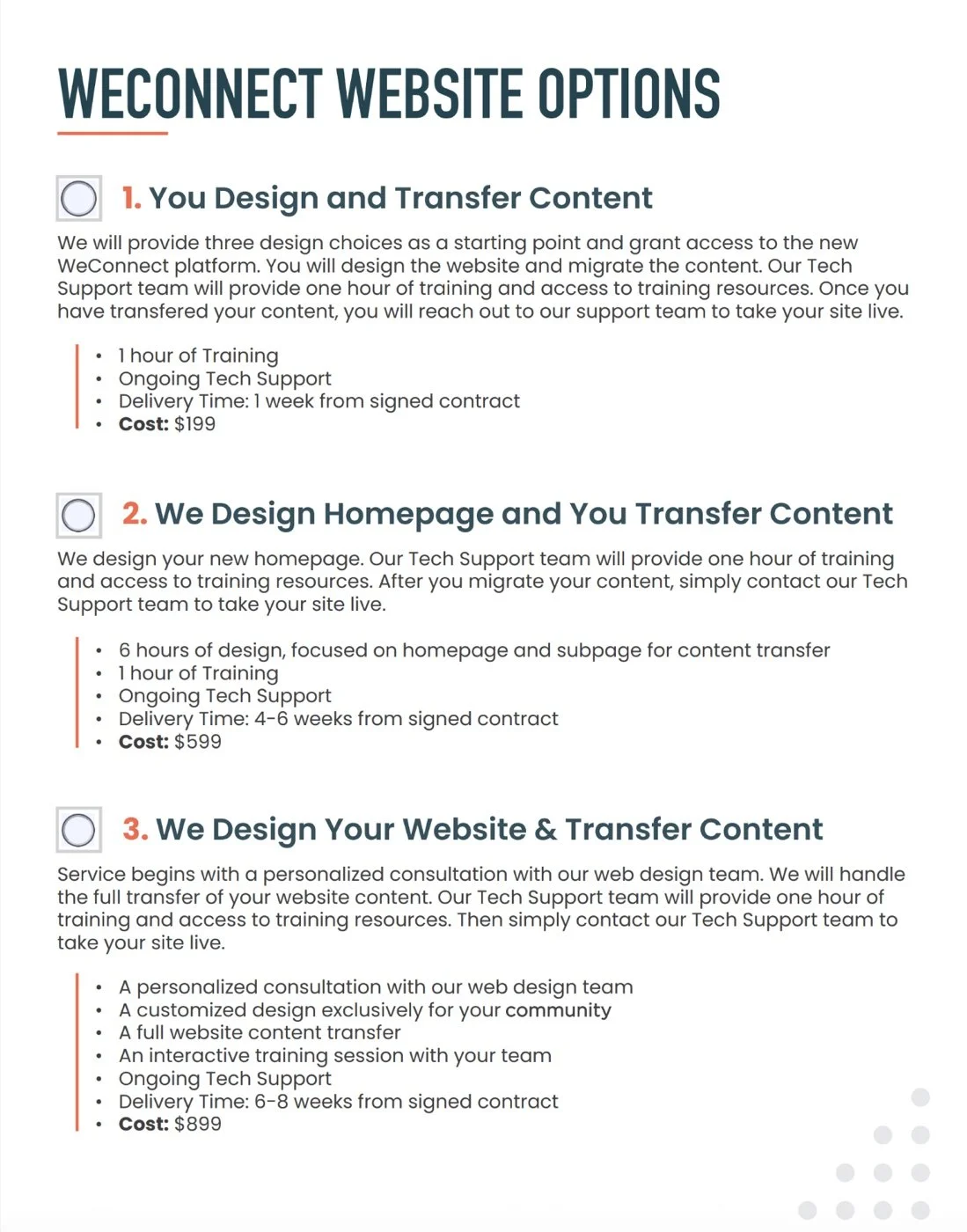
The options handout from launch, since retired, written so each customer could pick the help they needed.
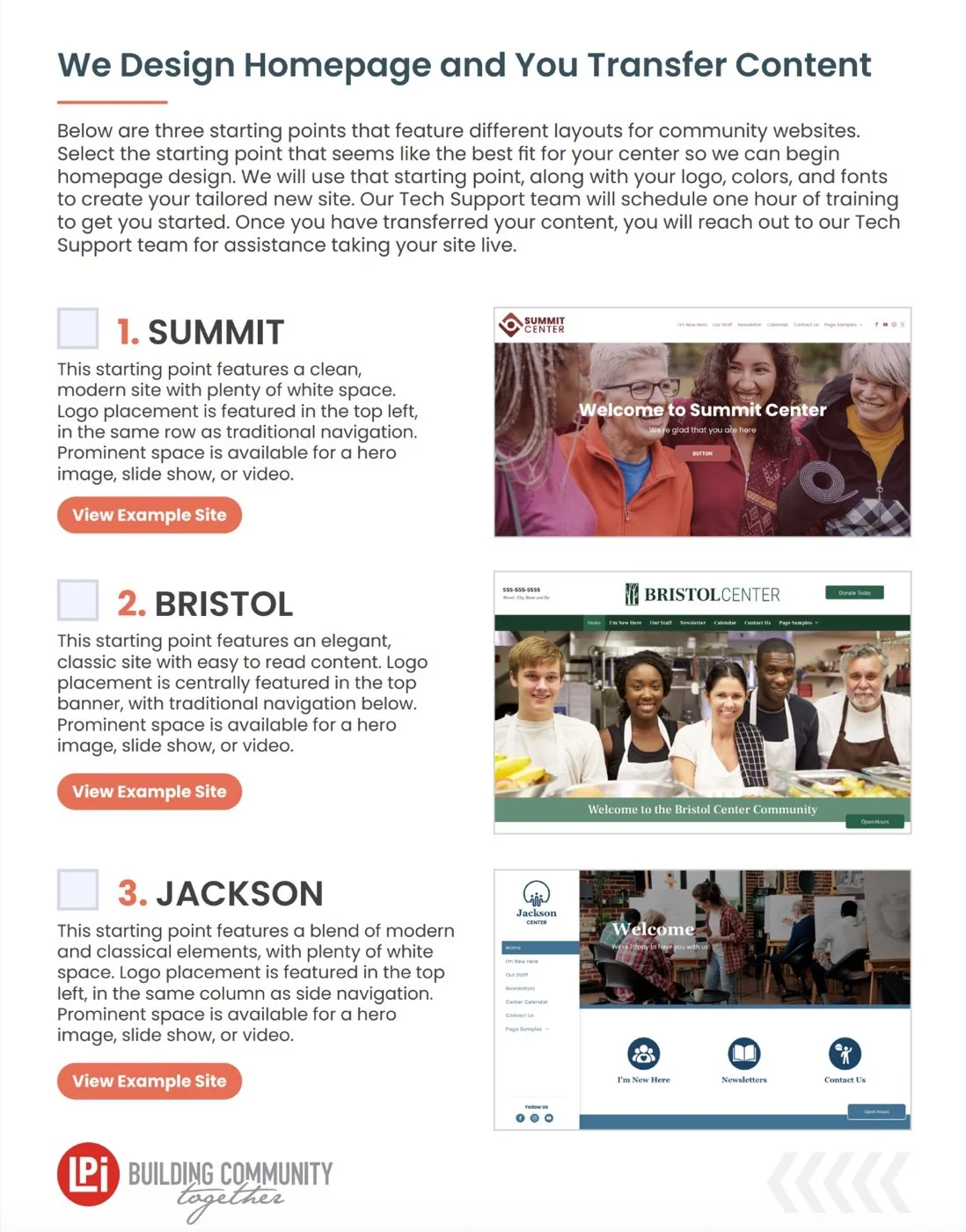
Starting points for a customer who chose to transfer their own content.
THE NEW PLATFORM
A builder customers can use, and a system the team can scale
Moving to Duda’s white-label platform means the team no longer fights ever-growing tech debt, and customers get new features as soon as they arrive. On top of it, I built two versions of the platform with custom templates for the internal design team to start from, and a library of modular content sections for customers: about 120 at launch, and more than 250 today.
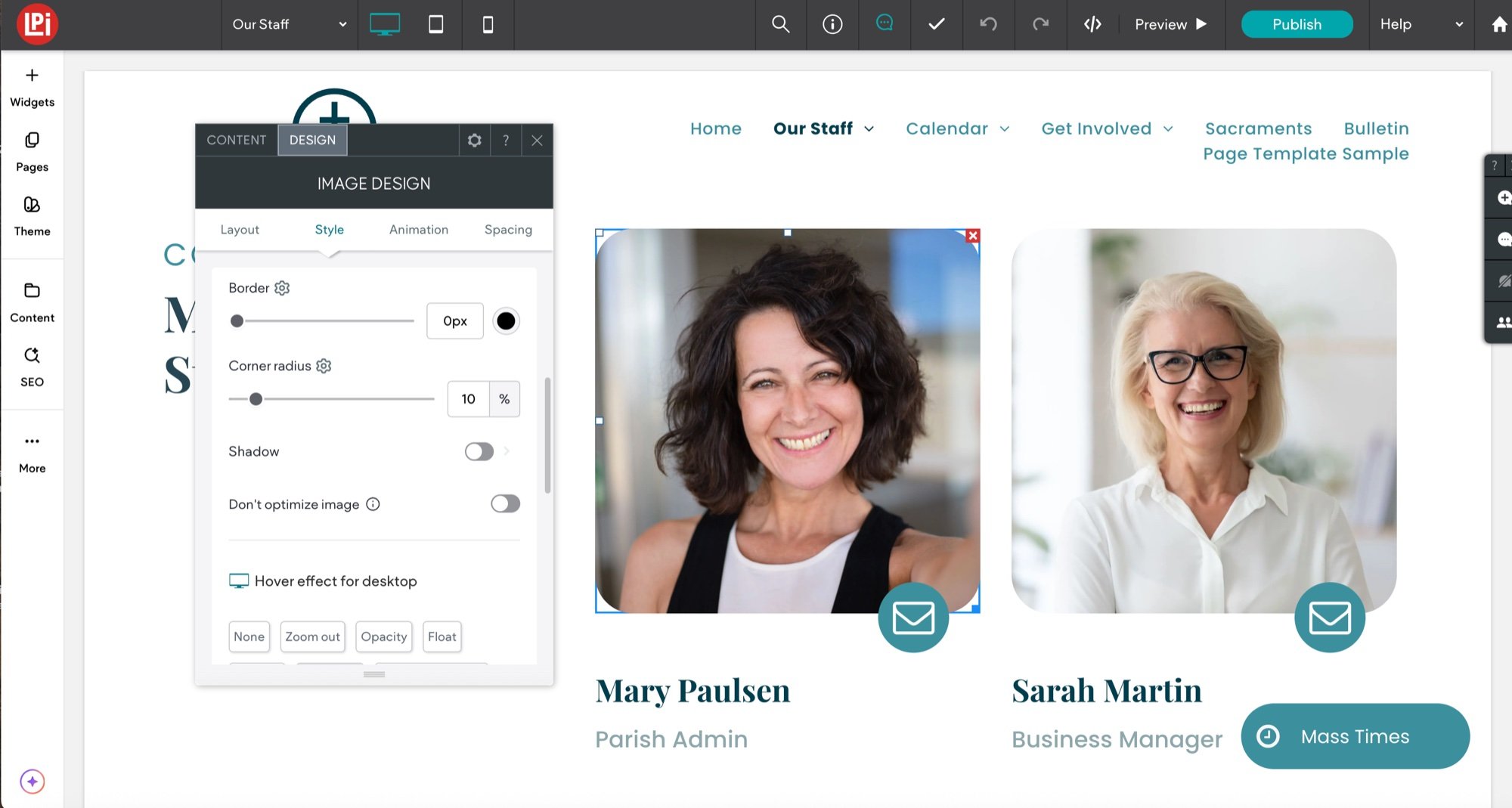
AFTER · EDITING A PAGE
Editing a page on the new platform: visual, direct and familiar to anyone who has used a modern site builder.
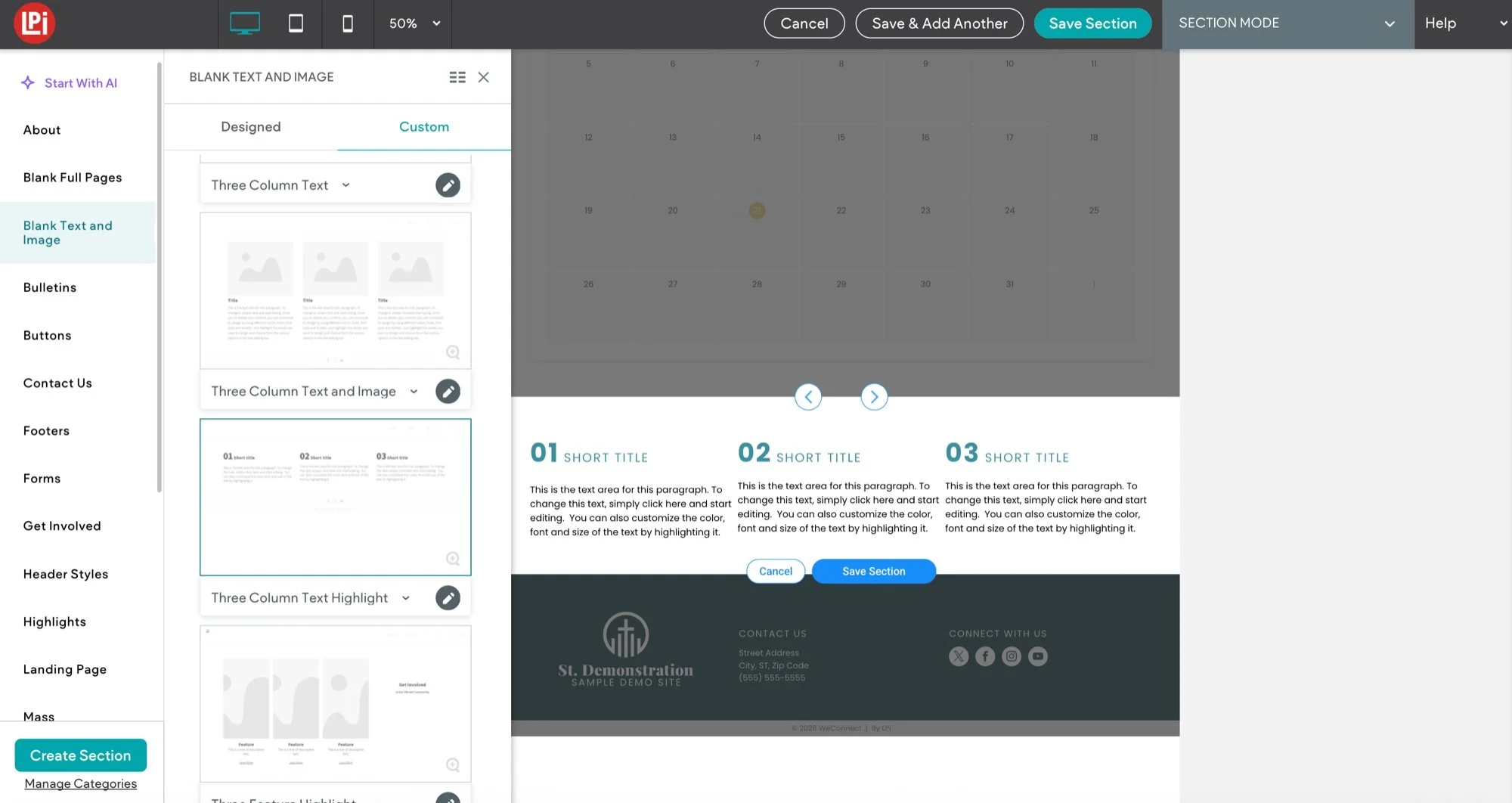
AFTER · THE SECTION LIBRARY
A small sample of the pre-designed sections I created. Theme colors and fonts flow in automatically; structure and layout stay consistent from site to site.
A NEW BUSINESS MODEL
Community sponsors fund the website
After strong sales and steady iteration on customer feedback, we saw a chance to grow the business. Many customers are nonprofits with little cash, but they have strong support from local businesses and people who care about their mission. So in early 2025, we introduced site sponsorship.
A local sponsor pays. Usually a small business, the sponsor funds the site’s creation and ongoing maintenance.
The sponsor is thanked publicly. The nonprofit’s home page recognizes them at the bottom.
Everyone gets a better deal. The sponsor pays $3,000 a year, well above the $999 a nonprofit pays for its own site. That grows revenue while keeping the product within reach of cash-constrained organizations.
I co-led early design decisions for the program and kept follow-ups moving across teams.
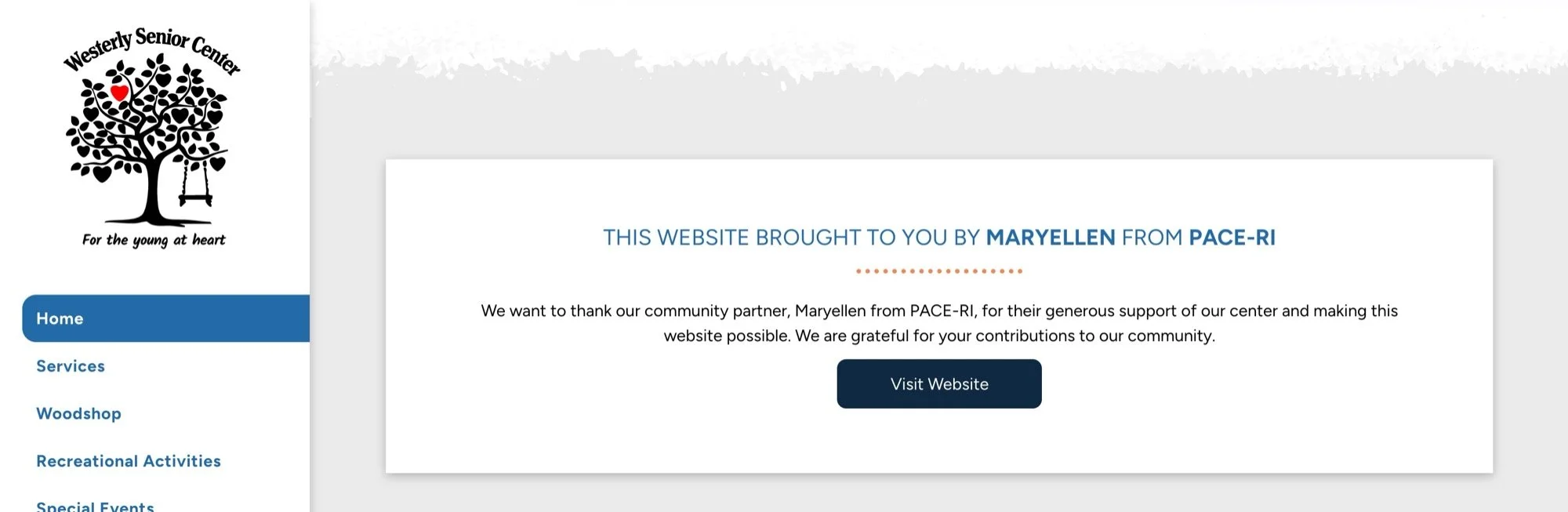
A sponsored site, with the sponsor thanked on the home page.
BUMPS ALONG THE WAY
What made it hard, and what we did
A lean team
The new product had to launch and run without a large engineering or support staff.
CHANGE A white-label platform instead of a custom build, starter templates for the design team, and SME roles so questions had an owner.
Every customer was different
Budgets, timelines and in-house skills varied widely across nonprofits.
CHANGE Three service options at launch, each with its own materials and process, later simplified to a custom site or a sponsored one.
Non-technical customers
Most customers weren’t web professionals, and the old platform had taught them to expect a fight.
CHANGE Pre-filled content modules, training videos and guides, and a live training session for every customer.
Customers with little cash
Many nonprofits needed a better website but couldn’t pay for one.
CHANGE Community sponsorship, which lets local supporters fund the site.

IMPACT
The new platform fully replaced the old one
Contract and onboarding data from Salesforce, as of January 21, 2026.
1,000+
website contracts signed
647
sites live
375
contracts supported by a sponsor
123
sponsored sites live
~6 weeks
the turnaround we can promise, from design to training
<8 hrs
average design team time per website
~0
support needed after launch, down dramatically
250+
modular sections in the library, up from about 120 at launch
Much less training. Support reports that customers need far less hand-holding, and more of onboarding is self-serve.
Fewer escalations. Internal teams rely on documentation and SME roles instead of escalating every question.
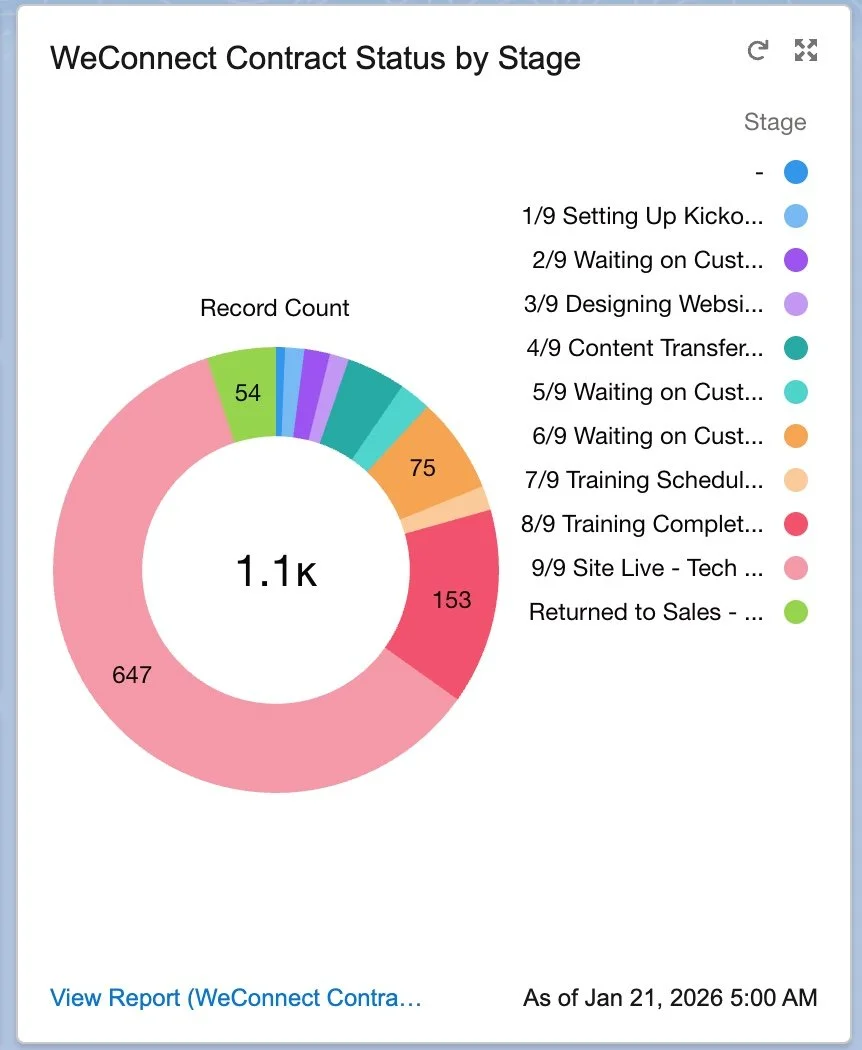
All website contracts by onboarding stage.
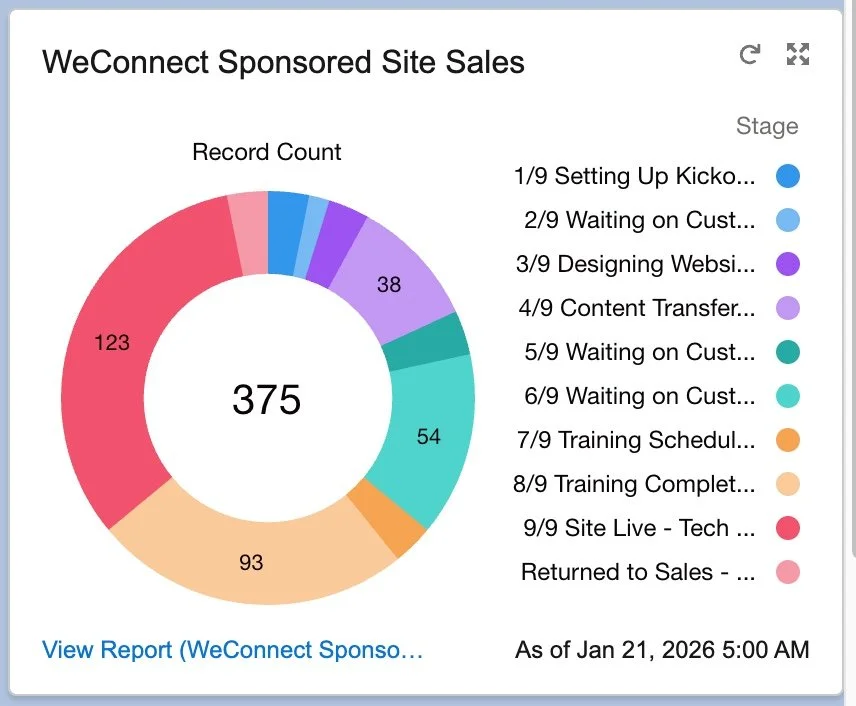
Sponsored site sales by onboarding stage.
CONCLUSION
A product a lean team could sell, launch and support
WeConnect went from a platform customers worked around to one they can use on their own. The site builder came from Duda; the product around it, from the first consultation to sponsorship, was designed in-house.
Buying the platform was the easy part. The product was everything around it.
Buy the platform, design the experience. A white-label builder ended the tech debt; onboarding, templates and training made it work for nonprofits.
Design for every scenario, then simplify. Clear options got the product launched; once the process was proven, fewer choices made it easier to buy.
Enable the team. Documentation and SME roles let a small team support a growing customer base.
Let the community fund the mission. Sponsorship turned local goodwill into revenue.
NEEDS INPUT Reminder: find a live example site to link here.
WeConnect · Megan Russell · UX/UI Designer